
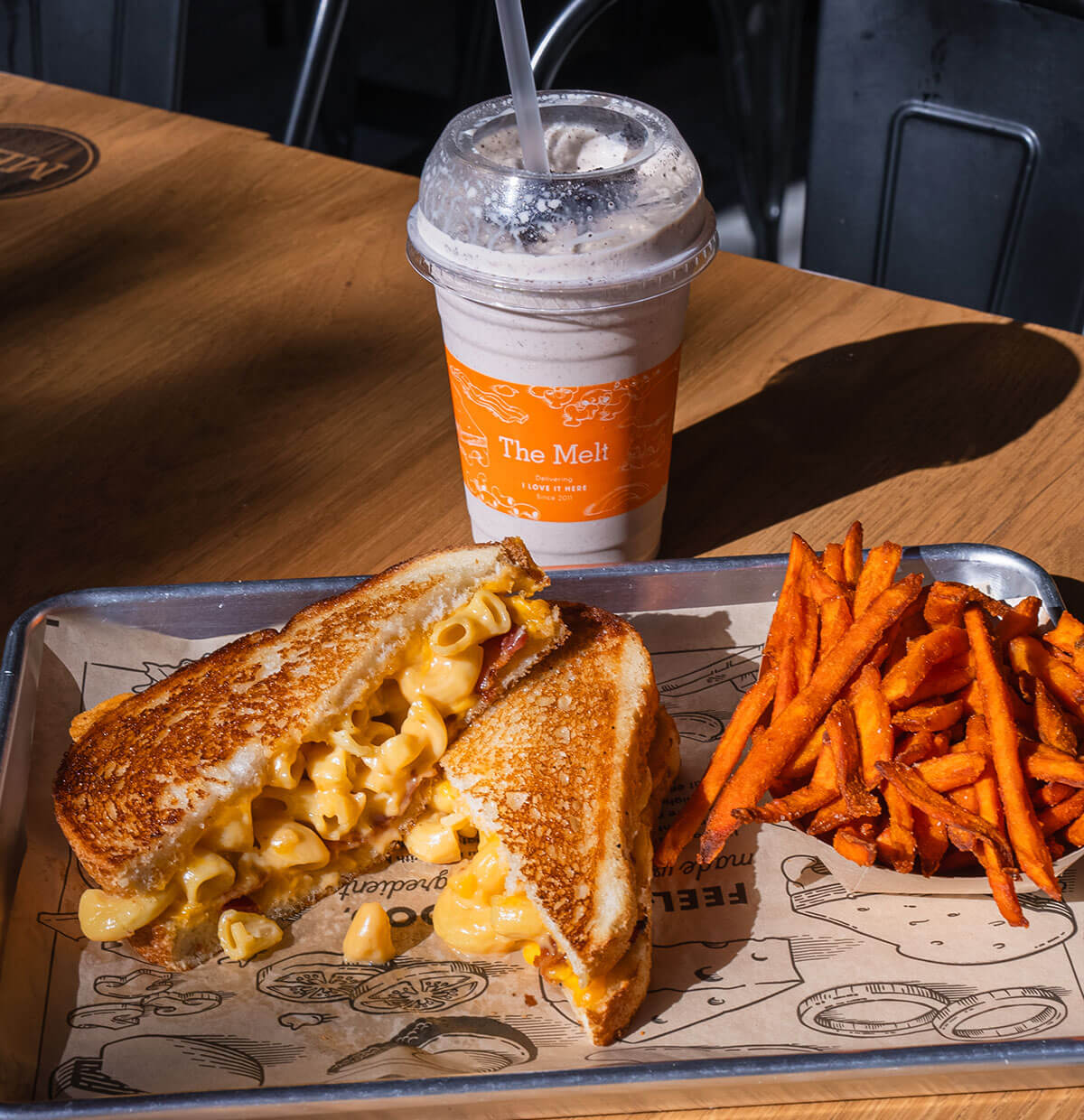
Sandwich-system operators and The Melt keep ending up in the same conversation because they already run the same kind of restaurant — an inline room, no drive-thru required — and they own different hours of the day.
Why do sandwich operators look at a burger brand?
Jersey Mike’s, Firehouse Subs, and a short list of other sandwich brands trained a generation of multi-unit operators on a specific problem: how to make a 1,500- to 2,500-square-foot inline restaurant work without a drive-thru to hide behind. Visibility, throughput, labor on a short line, lunch that has to be fast. That skill set does not automatically transfer to a chicken drive-thru or a coffee pad. It does transfer to a Melt restaurant.
How is the footprint similar?
The Melt’s prototype is 1,900 to 2,300 square feet, typically inline or end-cap. No drive-thru is required. The kitchen is built for a short ticket time and a menu that holds together after the order leaves the counter. Operators who already open rooms like that are not learning a new real-estate species. They are learning a different occasion.
That occasion is the point.
What hours does each brand own?
Sandwich brands own lunch. Many of them leave evening and late-night on the table, or close before the trade area is done spending. Company-owned Melt restaurants in well-placed locations often do 38 to 40 percent of sales after 8 p.m. Off-premise, including third-party delivery, is about 40 percent of sales. Those figures are explained at length in existing posts on late-night and delivery. The portfolio implication is simpler: a sandwich restaurant and a Melt restaurant in the same operator’s hands are not two versions of lunch. They are lunch and the rest of the day.
The footprint overlap is also how leftover sites show up. A sandwich operator on the hunt already sees the inline rooms a coffee pad and a chicken drive-thru will reject. Some of those rooms fail a sandwich non-compete. Some simply are the second or third site in a corridor that already has the sandwich brand. The Melt is not a sandwich restaurant. It is a burger-and-melts restaurant that can use the same dirt.
Greg Vojnovic, The Melt’s head of franchising, ran a Jersey Mike’s in Youngstown. That is not a recruiting gimmick. It is why the conversation with sandwich operators tends to start on operations rather than on a deck. The question is whether the operator wants an evening restaurant that sits next to a lunch restaurant they already know how to staff — not whether they want to become a burger specialist from scratch.
The diligence is the same as any other second brand. Read the set, not the slogan. Item 19 of the 2026 FDD covers 14 traditional company-owned restaurants with a full year of 2025 operations: more than $3.4 million average sales, prime cost 55.1%. Twenty-four restaurants are open as of September 2026. Eighteen were open at year-end 2025. California and Arizona stay company-owned. The minimum is five restaurants, planned as a system, against graded trade areas.
Who is this not for?
This is not a post about why every sandwich franchisee should sign. Plenty should not. Absentee owners, operators who need a drive-thru to make the site work, and groups that only want one restaurant will not like the agreement. The operators who keep asking are the ones who already run tight inline rooms and can see the hours their current brand does not own.
Same footprint. Different night. That is the whole argument. The FDD and a map decide whether it is true in a given DMA.
Q: Is The Melt a good second brand for a Jersey Mike’s or Firehouse franchisee?
A: It can be, for operators who already run inline restaurants and want an evening and off-premise occasion their sandwich brand does not own. The Melt uses a 1,900–2,300 square-foot restaurant with no drive-thru required. It is not a sandwich concept and is not a one-unit play.
Q: Do The Melt and Jersey Mike’s compete for the same ticket?
A: Lunch overlap exists in any food brand. The Melt’s disclosed company mix is heavier after 8 p.m. and in delivery than a typical sandwich lunch trade. Serious operators diligence that in the trade area, not on a blog.