
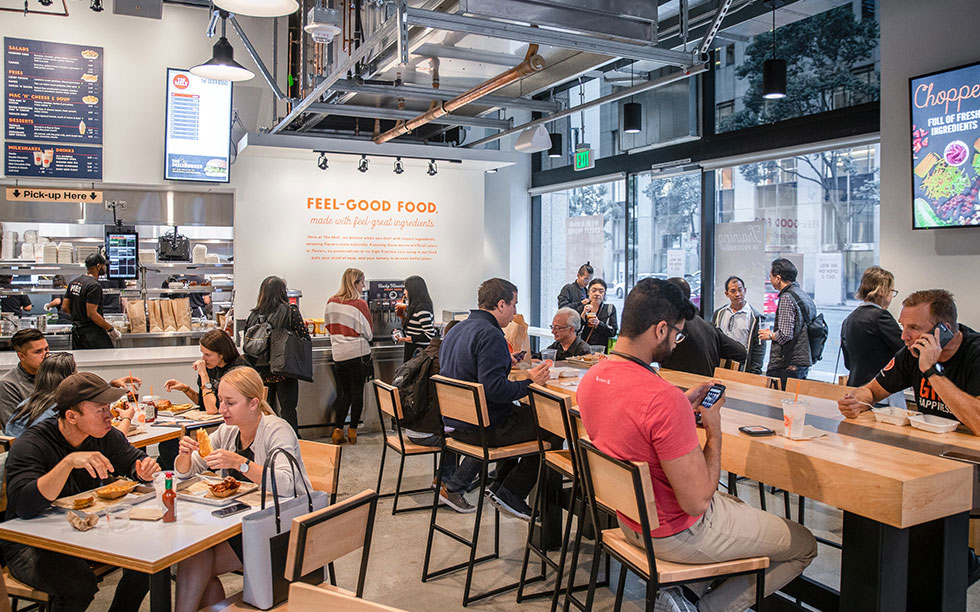
Why Dave’s Hot Chicken Operators Are Evaluating The Melt
The Melt’s Item 19 disclosure includes detailed unit-level performance data from company-owned restaurants, including revenue, expenses, labor costs, check averages, and daypart mix. This level of visibility allows prospective franchisees to model realistic returns with actual operating data.
Dave’s Hot Chicken makes no financial performance representations in its Item 19. Prospective franchisees must rely on informal conversations with existing operators or limited data from units being transferred.
The Melt’s current ongoing fees total approximately 7.5% of gross sales (5% royalty + 2.5% advertising fund, plus a modest local advertising minimum). Dave’s structure is higher — 6% royalty plus 4% marketing fund and a 1% local advertising requirement, creating a combined ongoing burden of roughly 11% or more.
Over time, this difference compounds into a meaningful cash flow advantage, particularly as units mature.
The Melt grants a 2-mile protected radius (or an area with at least 80,000 population) and, for operators committing to five or more restaurants, includes a 30-month reserved development area. The model is built around single-unit agreements with the option to grow, rather than mandatory multi-unit area development from day one.
In contrast, Dave’s operates primarily through Area Development Agreements that require multiple units and has become more prescriptive about development schedules and location approvals. Several Dave’s franchisees have noted increasing friction around where and when they are permitted to build.
The Melt uses a single-unit franchise model with deeper initial training — approximately 250 hours of combined classroom and in-store instruction. This hands-on approach is designed for operators who want to be closely involved in the business.
Dave’s model is built for larger-scale area developers and requires operators to build internal training infrastructure (certified trainers, restaurant managers, and new restaurant opening leaders). While this suits sophisticated multi-unit groups, it adds complexity and cost for operators who prefer a more straightforward, single-concept approach.
The Melt is still in the very early stages of franchising, with all current locations company-owned. This means the system currently offers greater territory availability and more direct access to leadership than more mature franchise systems. For operators who value transparency, protected markets, and a simpler fee structure, this window is worth evaluating while it remains open.
We are selective about the partners we bring into the system. If you have built a successful Dave’s Hot Chicken business and are experiencing pressure around development timelines or territorial flexibility — or if you are simply exploring high-quality concepts with stronger unit economics and clearer protections — we would welcome a direct, confidential conversation.
Financial performance representations in Item 19 of the The Melt’s 2026 Franchise Disclosure Document are based on company-owned restaurants only. Other than representations made in Item 19, we do not make any representations about a franchisee’s future financial performance or the past financial performance of any company-owned or franchised outlets. We also do not authorize our employee or representatives to make any such representations either orally or in writing. If you are purchasing an existing outlet, however, we may provide you with the actual records of that outlet. If you receive any other financial performance information or projections of your future income, you should report it to the franchisor’s management by contacting Greg Vojnovic, VP and Head of Franchising, 925 Market Street, San Francisco, California 94103, telephone 877-250-6358, the Federal Trade Commission, and the appropriate state regulatory agencies.
Company Name: Melt Franchising, LLC
Address: 925 Market Street, San Francisco, CA 94103