
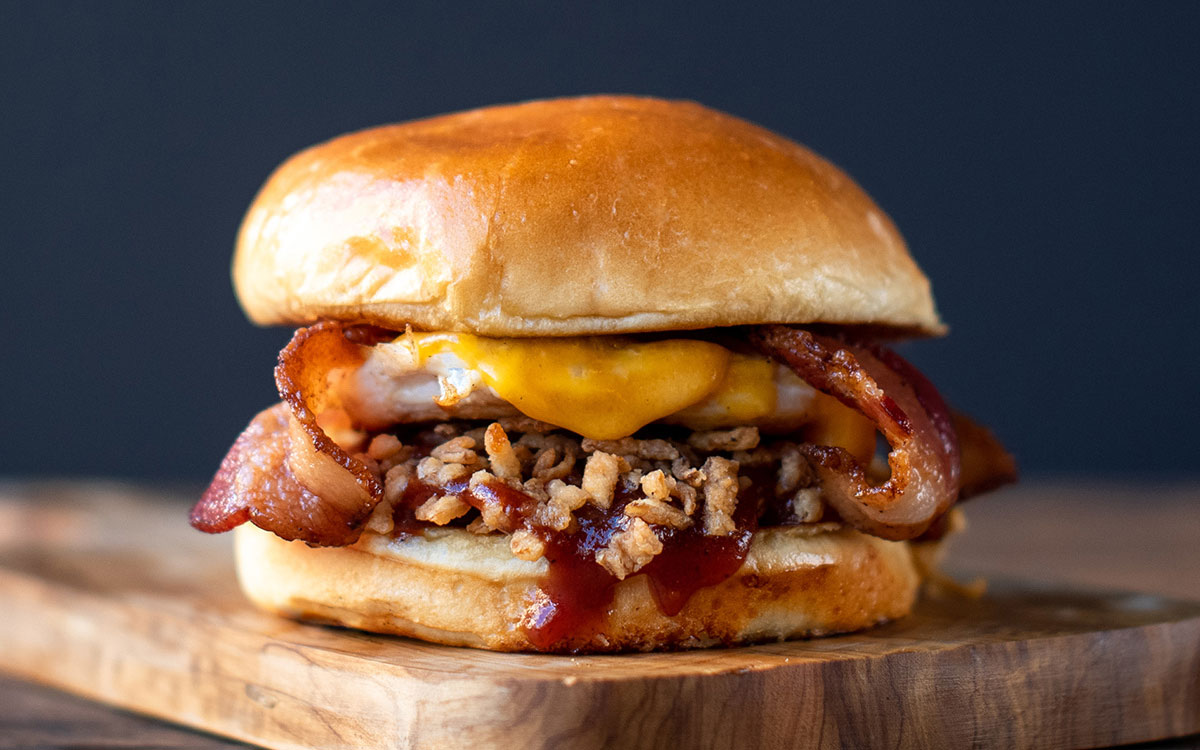
The first five franchise restaurants should open as one operating system, not as five separate openings. That means naming a training restaurant, building the general manager bench before the second lease is signed, and setting the opening calendar against graded trade areas. The Melt's standard development agreement is five restaurants. For smaller markets that can support only three, the company is considering three-restaurant agreements, and operators interested in one should talk with Greg Vojnovic directly.
Operators weighing a second or third brand can request franchise information here.
Key facts
- Who this is for: Multi-unit and multi-brand operators adding a concept
- Minimum commitment: Five restaurants is the standard development agreement. Three-restaurant agreements are under consideration for smaller DMAs with attractive trade areas but limited population; operators contact Greg Vojnovic directly
- Restaurant size: 1,900 to 2,300 square feet, typically inline or end-cap; no drive-thru required
- Territory approach: Trade areas are graded first; development territory is negotiated in the development agreement
- Item 19 sample: 14 traditional company-owned restaurants with a full year of 2025 operations; average sales of more than $3.4 million; average prime cost of 55.1 percent
- Restaurant counts, labeled: 14 in the Item 19 sample; 18 at year-end 2025 in the FDD (17 traditional and 1 non-traditional); 24 company-owned as of September 2026
- Not available: California and Arizona are company development markets, not franchise markets
Why does restaurant three break so many multi-unit plans?
The general manager bench runs out first, and the development agreement is usually the reason. A franchisor that sells agreements faster than it can support openings sets up the same failure as an operator who signs for five and staffs one.
"Most multi-unit plans don't fail on the concept. They fail on development agreements that are too aggressive on their size, too aggressive on the timing and too aggressive on sequencing. Restaurant three opens before restaurant one has a manager who can run a Saturday alone. Restaurant #7 never had a trade area in the market that would support it," says Greg Vojnovic, VP and Head of Franchising at The Melt.
What is a training restaurant, and which one should it be?
It is the first restaurant, and it should sit in the cleanest trade area available, not the cheapest rent. Every GM who goes through it learns whatever that site teaches. A compromise site teaches a compromise.
The bench comes before the second lease. The Melt's restaurants run 1,900 to 2,300 square feet with no drive-thru required, and a compact kitchen only stays simple if the people running it trained in a restaurant that already runs the playbook.
How should the opening calendar follow the map?
The calendar follows the trade areas, not a press release. The Melt grades trade areas first. If a market produces four A and B trade areas and a thin fifth, the honest schedule is four.
Some markets cannot carry five at all. A smaller DMA can have attractive trade areas but not enough population for more than three restaurants. The Melt is considering three-restaurant development agreements for those markets. The plan for each is built market by market with the franchisee.
Stretching five restaurants across five weak corridors is how an average restaurant ends up consuming the same capital as a good one. The map half of that discipline is covered in Plan-Led vs. Broker-Led: How Serious Operators Should Choose the First Five Trade Areas.
How do you protect late-night and delivery hours in the first restaurant?
Staff for them on purpose. In well-placed company restaurants, sales after 8 p.m. often run 38 to 40 percent of the total, and off-premise, including third-party delivery, is about 40 percent. That mix is an asset when the crew is built for it. It is a liability when lunch staffing is simply left in place until close.
The first restaurant should prove that schedule before restaurant two inherits it. The kitchen is designed around three production engines (clamshell grills, fryers and impingers) and a tight crew; the design intent is as few as four people on the floor, manager included, not a promise for every volume band or hour. See The Labor Math Multi-Unit Operators Actually Care About, and the channel itself is covered in How The Melt Built a Delivery Business That Actually Works.
How does a franchisor keep restaurant two from becoming a different concept?
By giving the operator a system to follow rather than asking for one to be invented. Multi-brand operators know the drift: the chicken brand's GM "helps," the sandwich brand's opening checklist gets reused, and six months later the new restaurant runs like a cousin of something else.
The Melt supplies central purchasing, opening playbooks and field support from people who have opened restaurants for a living. Ralph Bower, Greg Vojnovic and John Morlock have all been on the operator side of the table. None of that replaces an operator's own GMs, but the opening package is not a binder written by a consultant.
How many restaurants does The Melt require?
The standard development agreement is five restaurants, planned as one system against graded trade areas.
Smaller DMAs are the exception. The Melt is considering three-restaurant development agreements for markets with attractive trade areas but limited population, where three restaurants is what the market can support. Operators interested in one should come to Greg Vojnovic directly at 877-250-6358 or through the franchise information page.
The Melt is an experienced operator and looks to require only reasonable development requirements. It is not locked into specific ones. Greg looks at the markets under discussion and works out the best plan together with the franchisee, so fixed terms are not published.
The numbers come with labels. Item 19 in the 2026 FDD covers 14 traditional company-owned restaurants with a full year of 2025 operations: average sales of more than $3.4 million and average prime cost of 55.1 percent. Item 7 puts the investment at about $1.33 million to $3.02 million per restaurant, depending on market and build-out, with a $40,000 franchise fee and a 5 percent royalty. Read the actual Items before underwriting.
"If an operator already develops this way, the conversation is easy: identify best top trade areas first, training restaurant first, bench before the second lease, be disciplined on the real estate," says Greg Vojnovic, VP and Head of Franchising at The Melt.
An operator who plans differently is probably not the right fit for a second brand. To read how the FDD is laid out first, see How to Read a Young Brand's FDD Without Getting Fooled by the Average.
Request franchise information or call Greg Vojnovic at 877-250-6358.
FAQ
Why do multi-unit restaurant plans fail after the second opening?
The GM bench runs out. Restaurant three opens before restaurant one can run a Saturday without the operator, and restaurant four inherits the same thin staff. The concept is often not the problem. Sequencing is.
How many restaurants does The Melt require?
The Melt's standard development agreement is five restaurants, planned as one system against graded trade areas. For smaller DMAs with attractive trade areas but limited population, The Melt is considering three-restaurant development agreements. Interested operators should contact Greg Vojnovic directly at 877-250-6358 or request franchise information. The Melt looks to require only reasonable development requirements and is not locked into specific ones; it reviews each market with the franchisee to set the best plan together. Fixed terms for three-restaurant agreements are not published.
Which restaurant should be the training restaurant?
The first one, placed in the cleanest trade area available rather than the cheapest rent. Every general manager trained there learns what that site teaches.
Does The Melt franchise in California or Arizona?
No. California and Arizona are company development markets, not franchise markets.
Request franchise information to see whether a five-restaurant agreement fits your portfolio, or contact Greg Vojnovic at 877-250-6358 about the three-restaurant agreements being considered for smaller markets.